Table of Contents
- How to Avoid Dynamic Pricing for Airport Travel
- Why Airport Ride Surge Pricing Spikes When It Does
- Book Ahead: How Pre-Booking Locks In Your Rate
- Timing Your Departure Around Peak Demand Windows
- Flat-Rate Airport Limo Service Benefits for Frequent Flyers
- Private Sedan vs Luxury SUV for Airport Transfers
- Smart Pickup Strategies: Off-Site Zones and Transit Alternatives
- Conclusion
- Frequently Asked Questions
Last Updated: September 30, 2026
How to Avoid Dynamic Pricing for Airport Travel
Airport ride surge is the spike in fares that hits when lots of travelers want rides at the same time. It happens because ride-hailing apps raise prices as passenger demand climbs. The good news: you can sidestep most of it with a little planning. This guide from Airport Limo Link breaks down seven tips that work, from pre-booking to smart pickup spots. Below, we’ll show you exactly how to keep your airport transfer predictable and stress-free.
The core problem is simple. Dynamic pricing rewards the app, not you. When a flight lands late or a storm rolls in, fares jump fast. A flat rate does the opposite. It stays the same no matter what the traffic or weather does.
Here’s what most guides get wrong: they tell you to “just wait it out.” That rarely works at a busy airport at peak times. A better plan is to remove the guesswork before you even leave home.
Why Airport Ride Surge Pricing Spikes When It Does
Surge pricing is not random. It is an automated response to a real-time imbalance between rider requests and available drivers. Understanding the mechanism lets you predict when fares will jump and decide whether to wait, walk, or book a flat rate instead.
Here is the basic loop most ride-hailing platforms run:
- Demand spikes. A flight bank lands, a conference lets out, or rain starts. Dozens of riders open the app at once.
- Supply lags. Drivers are either dropping off elsewhere, stuck in traffic, or not yet in the airport queue. The ratio of requests to available cars climbs.
- The multiplier kicks in. The app applies a surge multiplier, often 1.2x to 3x the base fare, to pull more drivers toward the pickup zone.
- Drivers respond. Higher earnings attract cars from surrounding areas, but that takes time. Until supply catches up, you pay the premium.
- The multiplier fades. Once enough drivers arrive and requests are matched, the surge drops back toward normal.
That cycle explains why the worst fares often hit in the first 15-30 minutes after a trigger event. If you can wait out that window, or avoid the zone entirely, you often skip the peak.
The biggest triggers are easy to spot:
- Flight banks: Several arrivals landing within the same hour
- Bad weather: Rain or snow slows drivers and cuts supply
- Commuter traffic: Rush hour overlaps with airport runs
- Special events: Conferences or holidays flood the pickup zone
- Late nights: Fewer drivers on the road, higher fares
The psychology of the algorithm matters too. Surge is designed to balance supply fast, not to punish you. It raises prices to pull drivers toward the airport. That is good for the app and for drivers, but it is costly for you. Knowing that the spike is temporary, and that it responds to driver supply, helps you decide whether a 20-minute wait at a coffee shop beats paying 2x for an immediate pickup.
City of Toronto traffic and road condition data can help you see when roads are busiest. Check it before you travel.
Surge is a supply-demand signal, not a fixed fee. If you can shift your pickup by 20-30 minutes or move to a lower-demand zone, you often avoid the multiplier entirely.
Book Ahead: How Pre-Booking Locks In Your Rate
Pre-booking is the single most reliable way to avoid surge pricing.
Here’s how pre-booking protects your travel budget:
- Fixed price: Your rate is confirmed at booking
- No multiplier: Surge can’t touch a locked rate
- Buffer time built in: Drivers plan around your flight
- One payment: No guessing what the final total will be
Book your airport transfer at least 24 hours ahead. Last-minute bookings during peak windows often face the same surge you were trying to avoid.
A pre-booked ride also removes the wait. Your driver is already scheduled. There’s no scramble to find a car when you land.
Timing Your Departure Around Peak Demand Windows
Timing matters more than most travelers think. If you can shift your departure by even an hour, you can often dodge the worst fares.
The busiest windows at most airports tend to be:
- Early morning, when business flights depart
- Late afternoon into early evening, when commuters and arrivals overlap
- Sunday evenings, when weekend trips end
Flat-Rate Airport Limo Service Benefits for Frequent Flyers
For frequent flyers, a flat-rate airport limo service removes the biggest headache in ground transportation: price volatility. You know your cost before you leave. That makes travel expenses easy to plan and easy to report.
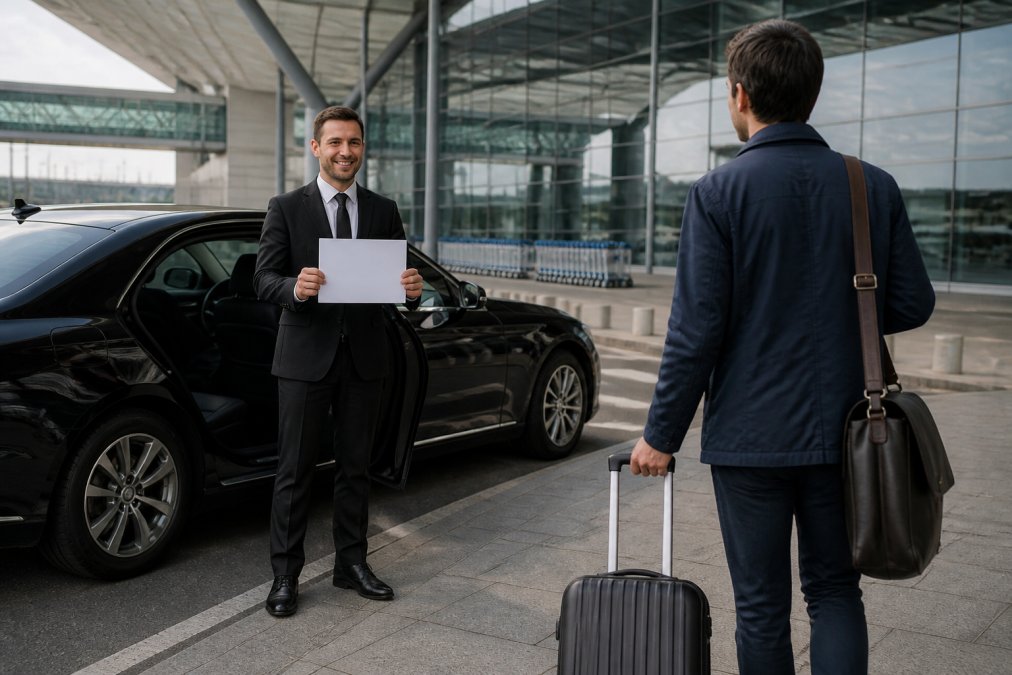
The benefits stack up fast for anyone who flies often:
- Predictable cost: The same rate every time you book
- Real-time flight tracking: Your driver adjusts to delays
- No hidden charges: What you book is what you pay
- Loyalty that adds up: Regular bookings often come with priority service
Private Sedan vs Luxury SUV for Airport Transfers
Choosing between a private sedan and a luxury SUV comes down to how you travel. A private sedan vs luxury SUV for airport transfers is really a question of passengers, luggage, and comfort.
| Vehicle | Best For | Luggage | Passenger Fit |
|---|---|---|---|
| Executive sedan | Solo or couple | 2-3 bags | 1-3 people |
| Luxury SUV | Families, groups | 4-6 bags | Up to 6 people |
Think about your trip before you choose:
- Solo corporate travel: Sedan, for speed and simplicity
- Family with kids: SUV, for space and child seats
- Group with luggage: SUV, for capacity
- Special occasion: Either, for a polished arrival
Smart Pickup Strategies: Off-Site Zones and Transit Alternatives
Sometimes the smartest move is to skip the curbside crush entirely. Off-site pickup zones and transit alternatives can cut both cost and wait time, but they come with trade-offs you should understand before you walk away from the terminal.
Types of off-site pickup zones
Most major airports have at least one of these:
- Cell phone lots: Free waiting areas where drivers park until you call. You meet them at a designated curb or short-term lot. This avoids the surge zone but adds a 5-10 minute walk or shuttle ride.
- Remote pickup areas: Some airports designate specific lots or garages a short walk from arrivals. These are often less congested and may have lower surge multipliers because fewer riders request there.
- Ride-hailing staging lots: Official areas where drivers wait for requests. If you walk to the staging lot, you may catch a driver before they enter the surge zone.
- Transit-adjacent pickups: Meeting your ride at a nearby train or bus station instead of the terminal. This can bypass airport-specific surcharges and surge entirely.
The safety trade-off
Walking away from the terminal to save money is not risk-free. A well-lit, staffed area with security cameras is very different from an unlit parking lot at 1 a.m. Before you choose an off-site pickup:
- Stay in well-lit, staffed areas. Prefer zones with security presence or clear signage.
- Confirm the vehicle and plate before you get in. Match the make, model, color, and license plate to what the app shows.
- Share your trip details. Send your driver info and route to a friend or family member.
- Avoid isolated areas. If the walk feels unsafe, the savings are not worth it.
Off-site pickups can save money, but they can also put you in an isolated area with no staff. If you are traveling alone at night, a pre-booked flat-rate ride from the terminal may be the safer and still predictable choice.
Combining transit with a pre-booked ride
A train or bus can get you past the busiest zone, where you meet a pre-booked driver at a lower-demand location. This works well when:
- Your flight arrives during a peak window
- The airport has a direct rail link to the city
- You are comfortable handling luggage on public transit
Conclusion
Beating surge pricing isn’t about luck. It’s about planning ahead, timing your trip, and choosing a ride with a locked-in rate. Airport Limo Link makes that easy with transparent flat-rate pricing, real-time flight tracking, and a modern fleet of executive sedans and SUVs. Licensed chauffeurs are available 24/7, and families can request pre-fitted child seats. Get started with Airport Limo Link and keep every airport transfer predictable, comfortable, and on time.
Frequently Asked Questions
Why does airport ride-sharing pricing fluctuate so much?
Ride-hailing platforms use algorithmic pricing that adjusts fares based on real-time passenger demand, driver availability, and congestion around terminal access points. When multiple flights land within a short window, ride requests spike faster than drivers can reach the pickup zone. The fare multiplier rises until supply catches up. Weather delays, commuter traffic, and events near the airport can push rates even higher. Because these factors change minute by minute, you cannot reliably predict what you will pay until you open the app.
Is it cheaper to book a private limo than a ride-share during peak hours?
During peak demand, ride-share fares can climb well above their base rate because of surge multipliers. A flat-rate airport limo service quotes one price at booking that does not change, regardless of traffic or demand. For frequent flyers and business travelers, that predictability often makes a private transfer more cost-effective than a surge-priced ride. The exact difference depends on your route and timing, so check current rates on the provider’s website before deciding.
How can I predict surge pricing at major airports?
Surge pricing follows patterns you can track. Early morning departures between 6 and 9 a.m. and evening arrivals between 4 and 7 p.m. on weekdays see the highest passenger demand. Sunday evenings and the first day after a long weekend also spike. Monitor real-time traffic and flight data before you travel. If your arrival overlaps a peak window, pre-book a flat-rate transfer instead of requesting a ride on demand. Buffer time of 30 to 45 minutes helps you avoid the worst of it.
What are the benefits of pre-booking airport transportation?
Pre-booking locks in your fare before demand pushes prices up. You also get a confirmed driver who tracks your flight in real time, so a delayed landing does not leave you scrambling for a ride at inflated rates. A pre-booked transfer includes meet and greet service, help with luggage, and a vehicle sized to your group. For families needing pre-fitted child seats or executives on tight schedules, pre-booking removes the uncertainty of waiting in a curbside pickup zone while prices climb.